


Significant Growth in the Self-Managed Superannuation Fund Sector: Insights from the ATO's June 2025 Report


The Self-Managed Superannuation Fund (SMSF) sector continues to be a cornerstone of Australia's retirement landscape. The Australian Taxation Office (ATO) recently released its quarterly statistical report for June 2025, confirming significant growth and revealing key demographic shifts that trustees need to be aware of.
For the first time, the sector’s total estimated assets have surpassed the $1.05 trillion mark, demonstrating resilience and confidence among trustees. Factors contributing to this remarkable growth include increased financial literacy, a shift towards a more hands-on approach to retirement savings, and the ongoing desirability for personalized investment solutions.
Furthermore, the SMSF sector plays a crucial role in Australia’s retirement landscape, accounting for a substantial share of the total superannuation assets. As more individuals recognize the advantages of SMSFs, including potential tax benefits and control over investment choices, it is anticipated that this upward trend will continue, further consolidating the importance of SMSFs in the country’s financial future.
Snapshot of the Sector (as of 30 June 2025)
The latest data paints a clear picture of a growing and maturing sector:
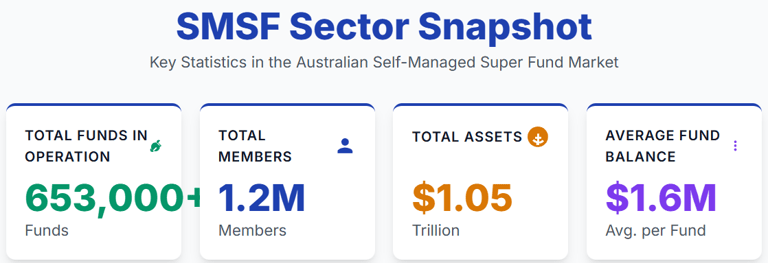
Total Funds: Over 653,000 SMSFs in operation.
Total Members: Approaching 1.2 million members.
Total Assets: $1.05 trillion.
Average Fund Balance: Approximately $1.6 million per fund.
Crucially, the June 2025 quarter saw around 11,000 new SMSFs established, marking a period of robust growth and confirming that Australians continue to value the control and flexibility an SMSF offers.
Furthermore, the number of operational SMSFs has also witnessed a significant uptick, reaching approximately 600,000 funds, which represents a growth rate of nearly 10% compared to the previous year. This rise in numbers indicates that more Australians are choosing to take control of their retirement planning through self-managed funds, driven by a desire for tailored investment strategies that align with individual financial goals.
Asset Allocation Trends
While overall asset levels have risen, the way SMSFs are investing continues to evolve, with a noticeable inclination towards diverse asset classes, including property, shares, and alternative investments. This shift reflects a sophisticated approach to portfolio management, enabling trustees to optimize their retirement outcomes. The top asset classes held by SMSFs (by value) remain consistent, confirming a focus on tried-and-true investment categories:
Listed Shares: Representing the largest share of assets (approximately 28%).
Cash and Term Deposits: Holding strong as the second-largest asset class (approximately 16%), highlighting a current preference for liquidity and stability.
Direct Property: Remains a significant component of the asset mix.
The Youthful Shift: New Entrants
A particularly interesting trend is the demographic shift in new fund establishments. While the majority of current SMSF members are aged 45 or older, younger Australians are increasingly driving new fund growth.
Individuals aged 35 to 44 accounted for a significant portion of new SMSF entrants in the June quarter.
This trend underscores a growing financial literacy and a desire for control among younger generations who seek to tailor their investment strategies, often leveraging technology for greater engagement with their superannuation.
What This Means for Safenest Super Clients
The ATO statistics confirm the strategic importance of running a compliant and well-managed SMSF. The sector is healthy, but the increased complexity (especially with new tax proposals looming) means adherence to regulatory requirements is non-negotiable.
Key Takeaways for Trustees:
Maintain Current Valuations: The ATO is increasing scrutiny on asset valuations, particularly for unlisted assets like property. Ensure your fund's market valuations are current and supported by verifiable evidence.
Compliance is King: As the sector grows, so does the ATO's data matching capability. Timely lodgement and accuracy in reporting are vital.
Review Strategy: If your balance is growing significantly, now is the time to review your contribution strategy, insurance arrangements, and pension planning.
Disclaimer: Safenest Super is a professional accounting firm. The information provided is general in nature and does not constitute personal financial or tax advice. We recommend consulting a licensed financial advisor for tailored advice.
Safenest Super is a professional accounting firm. All information on the website has been prepared without taking into account your personal objections. Before acting on any information, you should carefully consider your personal circumstances. We strongly recommend that you consult with a licensed financial planner to obtain a statement of advice.
Liability limited by a Scheme approved under Professional Standards Legislation